
Silicon Valley believes in backing exceptional people before the world understands them. Ideally, before the world has asked too many follow-up questions. There is a brief, beautiful interval in a company's life when the founder's potential is limitless and the customer's requirements are still described as edge cases. It photographs extremely well.
Y Combinator scheduled its Summer 2026 Demo Day for September 10.1 The occasion is a useful prompt for a question that extends well beyond one accelerator: when we say a founder is exceptional, exceptional at what? Building the technology? Learning a market? Persuading a room that the first ability guarantees the second?
The immaculate résumé
The young technical founder is an irresistible protagonist. The achievements are legible. The ambition is enormous. The absence of a long career leaves fewer inconvenient chapters for the origin story. We get the intelligence without the weary explanation of why the industry is more complicated than it looks.
None of this is an argument against youth. A teenager can discover something an entire profession has missed. A veteran can spend thirty years confusing familiarity with understanding. Experience is not a sacrament either. But neither is winning a competition whose problem arrived fully specified, with the relevant variables helpfully supplied.
Customers are less considerate. They do not hand over a clean problem. They tell you about a workaround, then mention that the workaround exists because of a supervisor, a budget code, or a machine that cannot be taken offline. The thing they initially asked for may not be the thing they need. The person who needs it may not be the person who can buy it.
Even the familiar youth mythology deserves inspection. A 2018 working paper using U.S. Census Bureau data found a mean founder age of 45 among the fastest-growing one-in-a-thousand new ventures; specific industry experience also predicted higher success rates.2 That is not a verdict on this year's YC cohort. It is a reason to stop using a birth date as either an investment thesis or a disqualification.
The customer lives outside
Consider a hypothetical company building a wearable device to make physically demanding work easier. This is not a description of a particular YC startup. The engineering might be superb: elegant actuation, clever materials, an impressive demonstration. We should want it to succeed. Bodies are expensive things to repair.
Now put the device into a working day. Can the wearer sit down? Get through a narrow opening? Use it with the equipment already required? Remove it quickly? Clean it? Share it across a shift? If it fails, does the user finish the job without it, or stop the operation while somebody finds a specialist?
The product includes the narrow doorway. Leaving it out of the demonstration does not widen it.

A demanding customer.
Limited tolerance for bugs.
Collection record ↗
A founder does not need to have done every customer's job. That would rule out a great deal of useful invention. They do need a way for the customer's reality to overrule their own enthusiasm. A field test that can only produce a testimonial is not quite that mechanism.
And use is only part of demand. Someone might love a device and still be unable to purchase it. A buyer might approve it and discover that the people expected to wear it leave it in a cupboard. “The customer” is often several people having an argument. On a slide, we give them one logo.
The customer is the environment.
The church has excellent scripture
Here is the complication for an easy anti-YC piece: YC's actual advice is inconveniently sensible. Its published guide tells founders to talk to users, find a small group who love the product, and avoid confusing valuation with success.3 It would be unfair—and boring—to accuse the institution of having never considered the customer.
The tension is between the doctrine and what a fundraising ceremony makes easy to see. Intelligence can announce itself in a biography. A demonstration can happen onstage. Customer understanding often arrives as a collection of unglamorous revisions: a feature removed, a workflow simplified, an assumption quietly abandoned.
Those revisions are difficult to applaud in sequence. Nobody dims the lights for the moment a founder discovers that the hospital needs a different billing arrangement. Yet that might be the discovery on which the company depends.
Investors help create this confusion. We ask founders to make uncertainty concise, then reward the ones who make it sound absent. Later, when reality reappears, we call it an execution problem. An elegant arrangement. The doubt has been outsourced to the company.
The least cinematic part of the future
There is a useful real-world counterexample in wearable robotics. A 2023 paper describes the development of SABER, a back-assist exosuit, through a year of work involving feedback from more than 100 soldiers. The subsequent field study involved eleven soldiers during an artillery training exercise.4
The researchers assessed practical concerns including fit, heat, snagging, and interference with movement. Responses were generally positive. But this was a small study of perceived usability and performance, not proof of long-term injury prevention; the authors also disclosed relevant intellectual-property and financial interests. Promising evidence, with boundaries. Imagine putting both on the same slide.
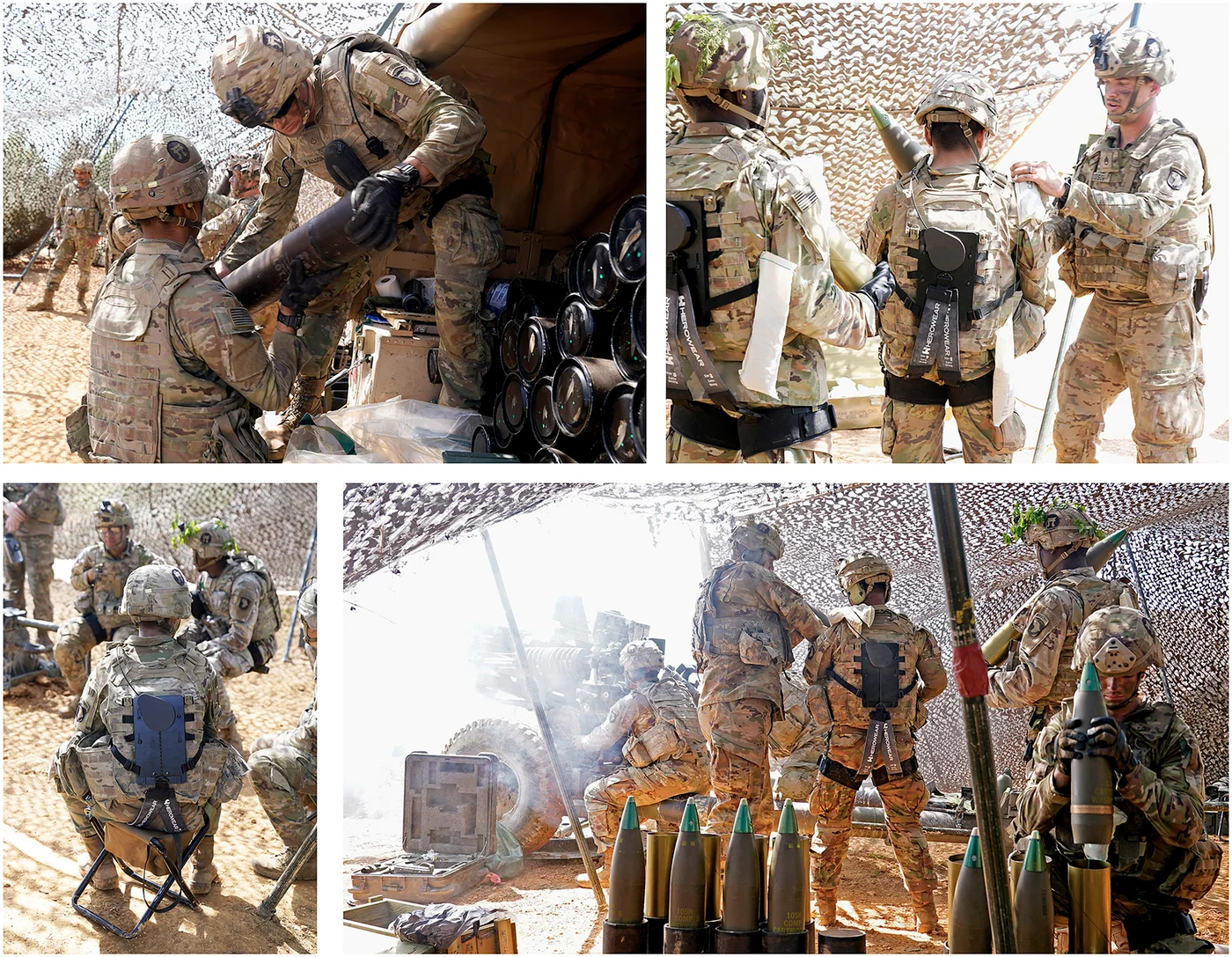
“Trust me, bro” is not always wrong. It is simply not a testing protocol. What matters here is the direction of authority: the people doing the job get to complicate the design. The inventor has to listen. The glamour is optional.
In praise of useful doubt
There is a bad version of this argument in which nobody gets to build anything until they have accumulated enough years, scars, and institutional permission. We have tried that system. It has a procurement department and would like you to resubmit the form.
Show the invention. Then show what changed when somebody outside the founding team used it. Explain who declined, what broke, which requirement was irritating enough to be real. Tell us about the customer who made the pitch less impressive and the product more useful.
Keep the stage. Keep the ambition. But before the next round, let someone who has to use the thing have the microphone.