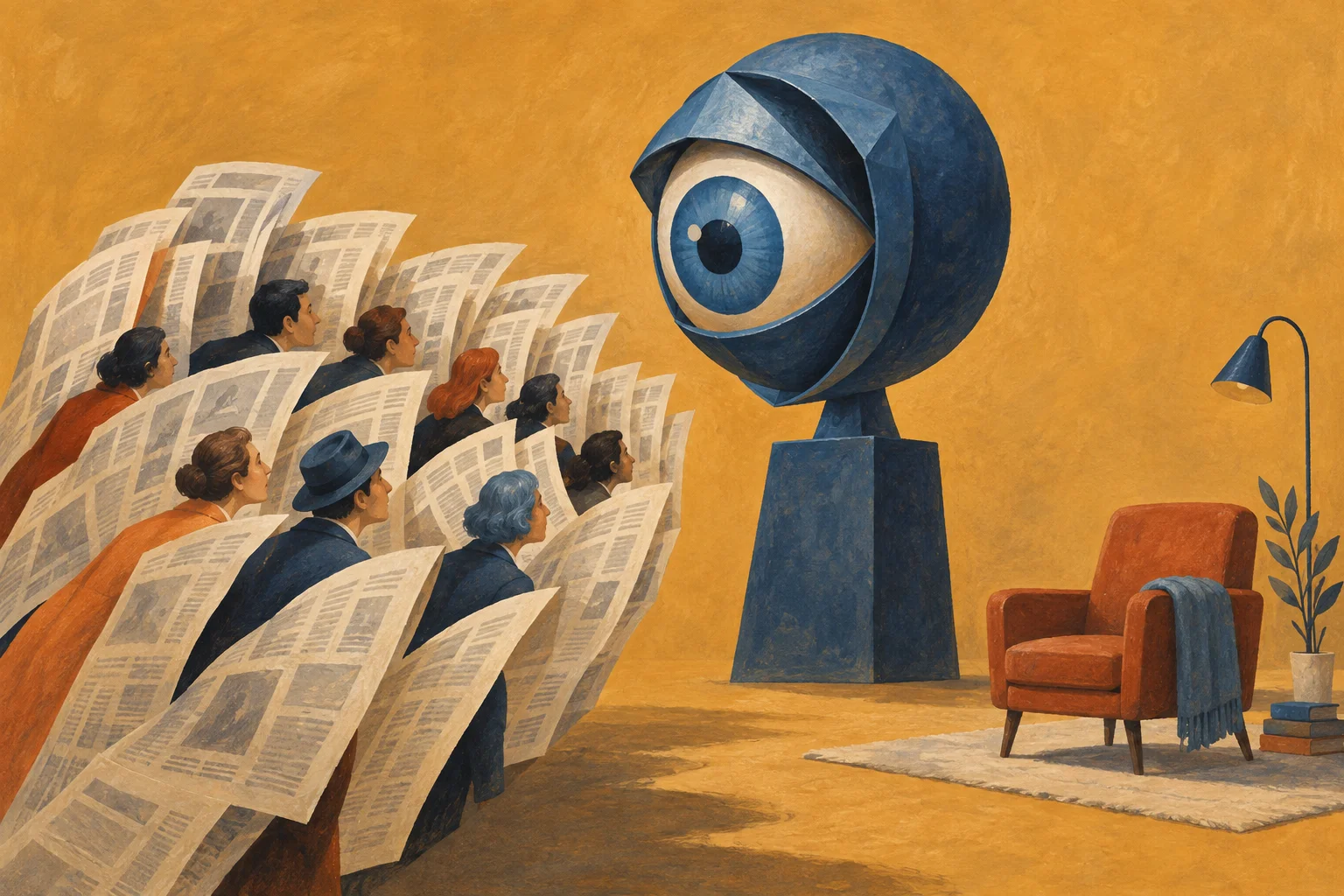
The internet once had a distribution problem. You could make something interesting and struggle to find the people who wanted it. We have addressed this by making enough material that finding people is no longer strictly necessary.
There is now a plausible destination for almost every generated post: another system that summarizes posts. The original can be summarized into a thread, the thread into a newsletter, and the newsletter into an inspirational observation about the importance of human connection.
In May, Robin Moffatt wrote about the burden low-effort AI material places on online communities. His essay distinguishes useful, carefully made contributions from indiscriminate output; it is not an argument that using AI automatically invalidates the work. It is a participant’s account, not a census of the internet.1
The tool has lowered the cost of producing an artifact. Somebody else still has to open it. The recipient’s afternoon was not included in the productivity calculation.
The reader is not a free tier
When the cost of submission falls, those other activities do not necessarily become cheaper. A hundred plausible contributions still need to be understood. A wrong answer that sounds right can demand more work than an obviously unfinished one.
The person pressing publish experiences abundance. The person reading the feed experiences a queue.
Eventually, the people doing that work may stop. The feed can remain active while the community becomes less useful. Activity is not the same thing as continued willingness to care.
A weekend project acquires a user
Imagine a developer who generates an interesting experiment over a weekend. They publish it with a polished description and announce it in six communities. This can be perfectly reasonable if the work is useful, honestly described, and relevant to those audiences.
Now imagine that the experiment has not been used, the claims have not been checked, and the developer has no intention of responding to issues. The announcement is still polished. The cost has moved to everyone who investigates whether there is something behind it.
A beginner deserves room to learn. The user deserves to know when they have been recruited into the lesson.
We are not exempt because we have a nice font
A publication using AI tools to help produce writing should be particularly careful with this argument. Beautiful typography does not turn unchecked output into editorial judgment. Nor does a source list, if the sources do not support the claims.
Read the output. Check the claims. Decide whether anyone needs it. A good font can wait until those jobs are done.
The temptation to fill every available slot is strong. An empty calendar looks like a productivity problem. Sometimes it is evidence that the next piece has not earned its place yet.
A healthier kind of abundance
An editor can return the piece, remove the unsupported claim, or decide there is no piece. A filter that only makes the sentences prettier leaves all three decisions untouched.
Somebody has to be willing to close the draft without publishing it. That feature remains surprisingly difficult to automate.